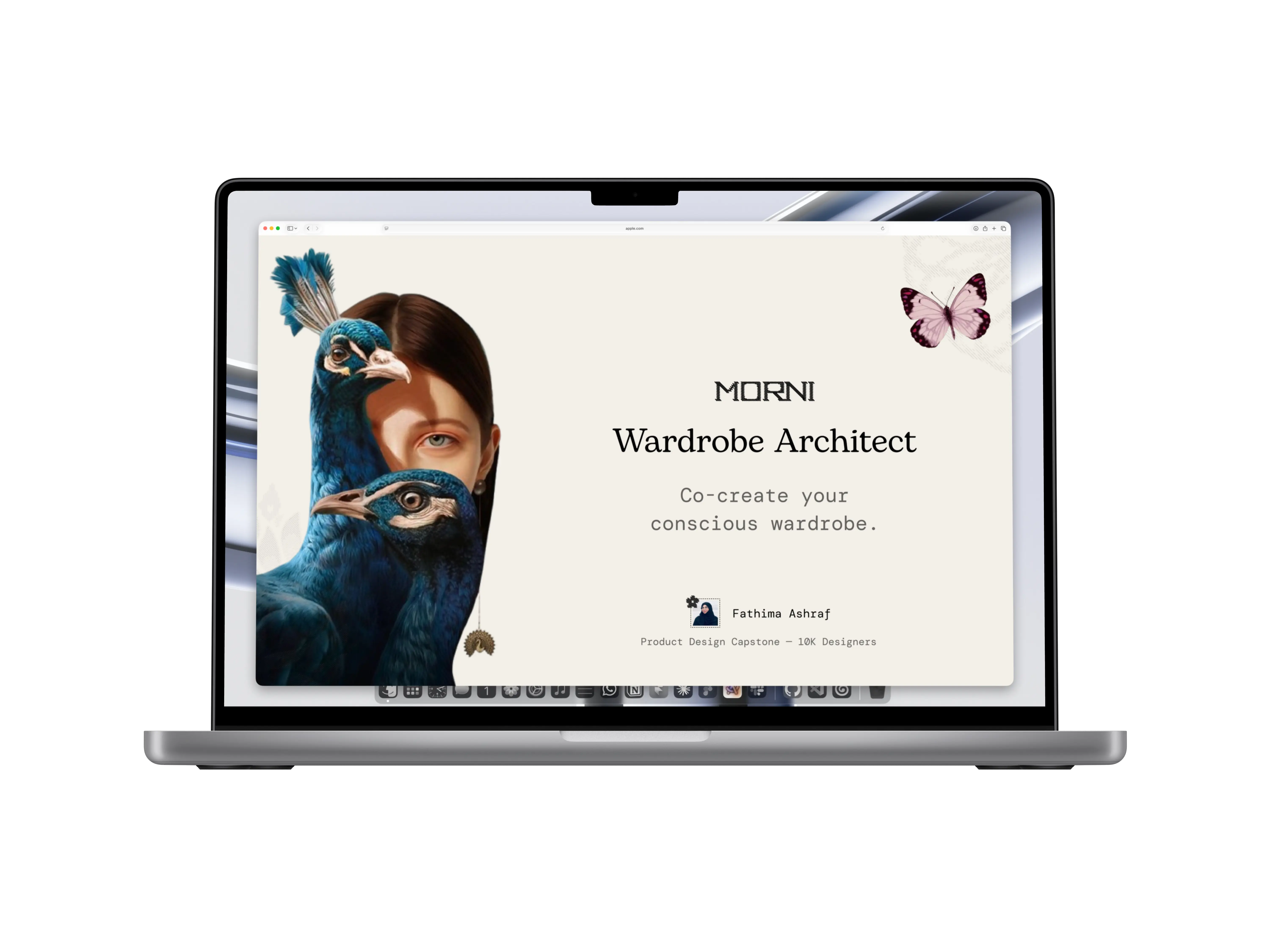
[The Shift]
Instead of asking users to design one piece at a time, I reframed the experience around a simpler question:
"What does your wardrobe need?"
This led to a shift from garment-level design → wardrobe-level thinking.
[What I Did]
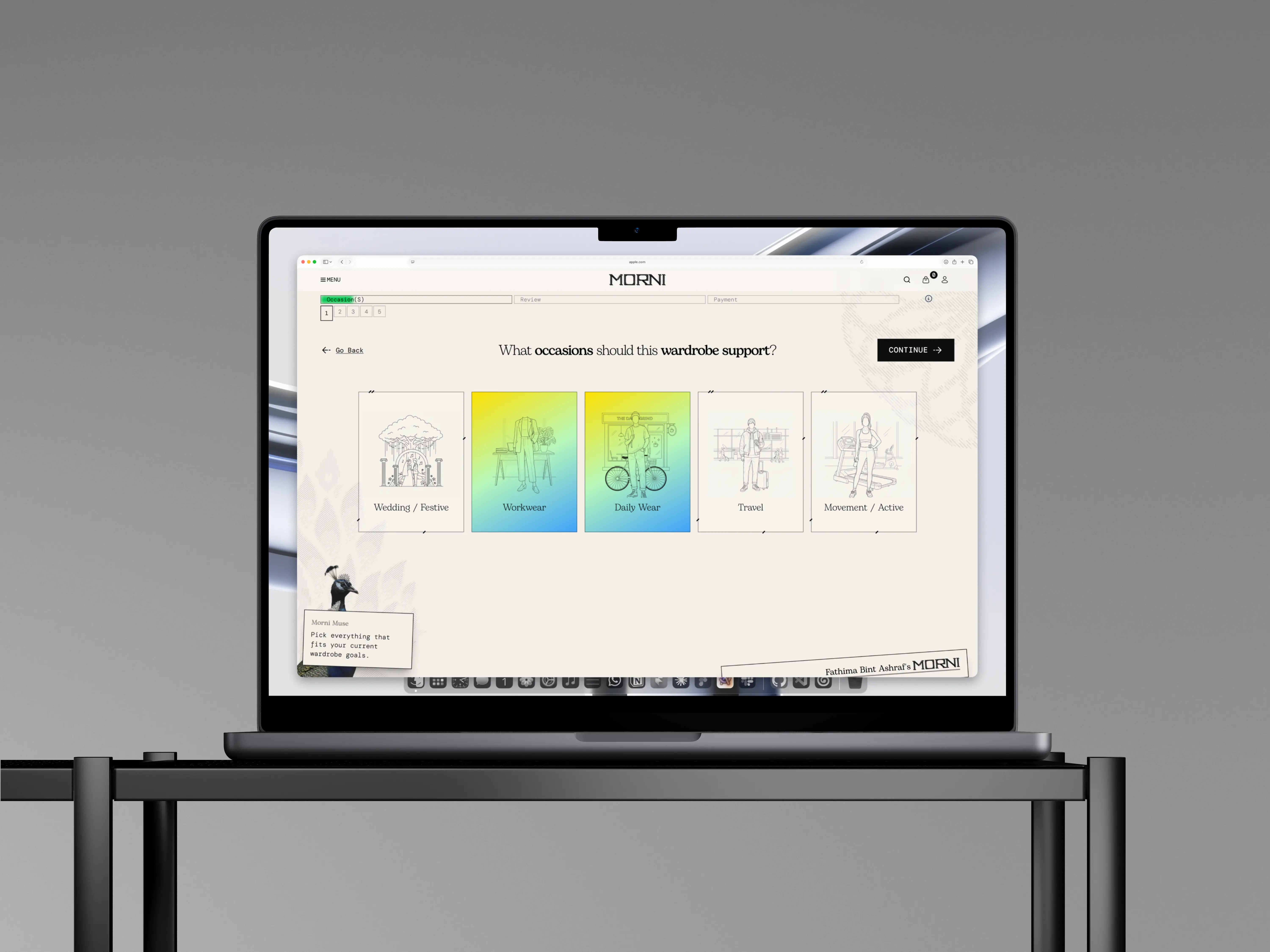
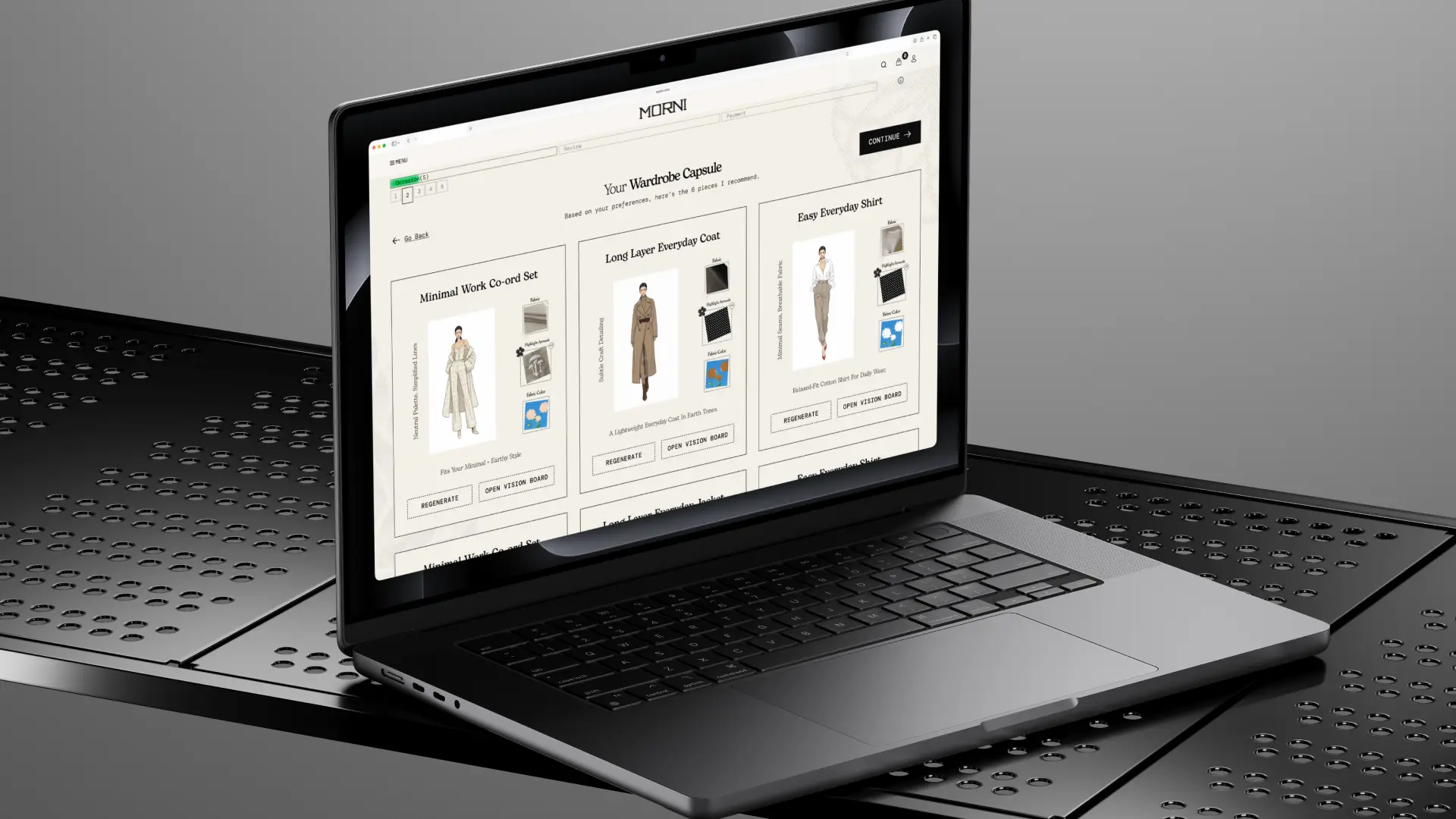
I introduced a Wardrobe Planner that captures high-level inputs like occasion, vibe, materials, and silhouettes. Using these, the system generates a cohesive capsule of multiple pieces, each presented as an editable vision board.
[Wardrobe Planner]
Users begin by selecting:
- Occasion (wedding, workwear, daily, etc.)
- Vibe (minimal, expressive, earthy…)
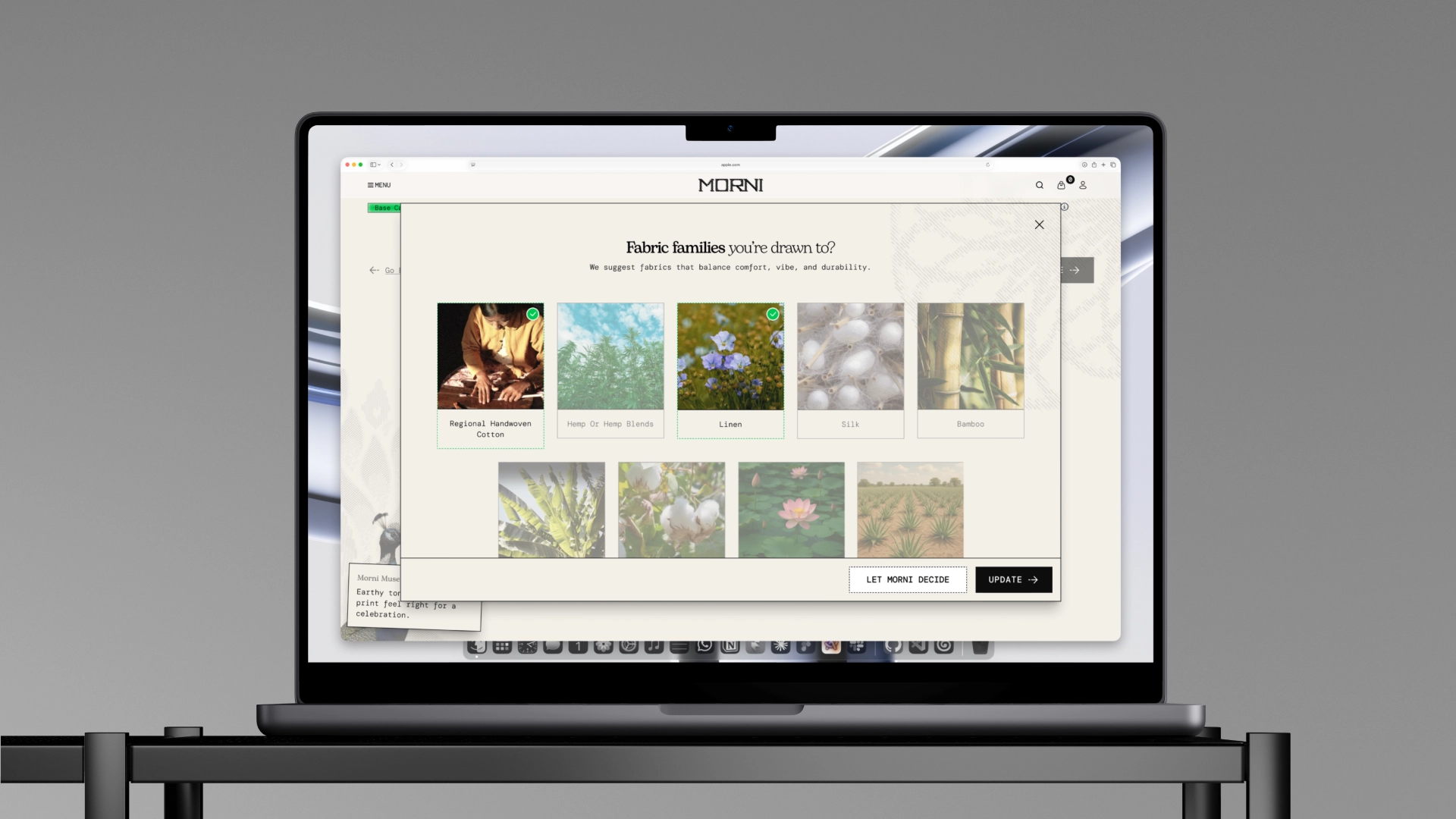
- Materials
- Silhouettes
AI translates these inputs into structured preferences and generates a set of coordinated pieces.
[Capsule Experience]
Instead of a single output, users receive a capsule of 4–6 pieces.
Each piece is:
- Contextually relevant to the occasion
- Stylistically consistent
- Designed to work together as a system
[Vision Boards]
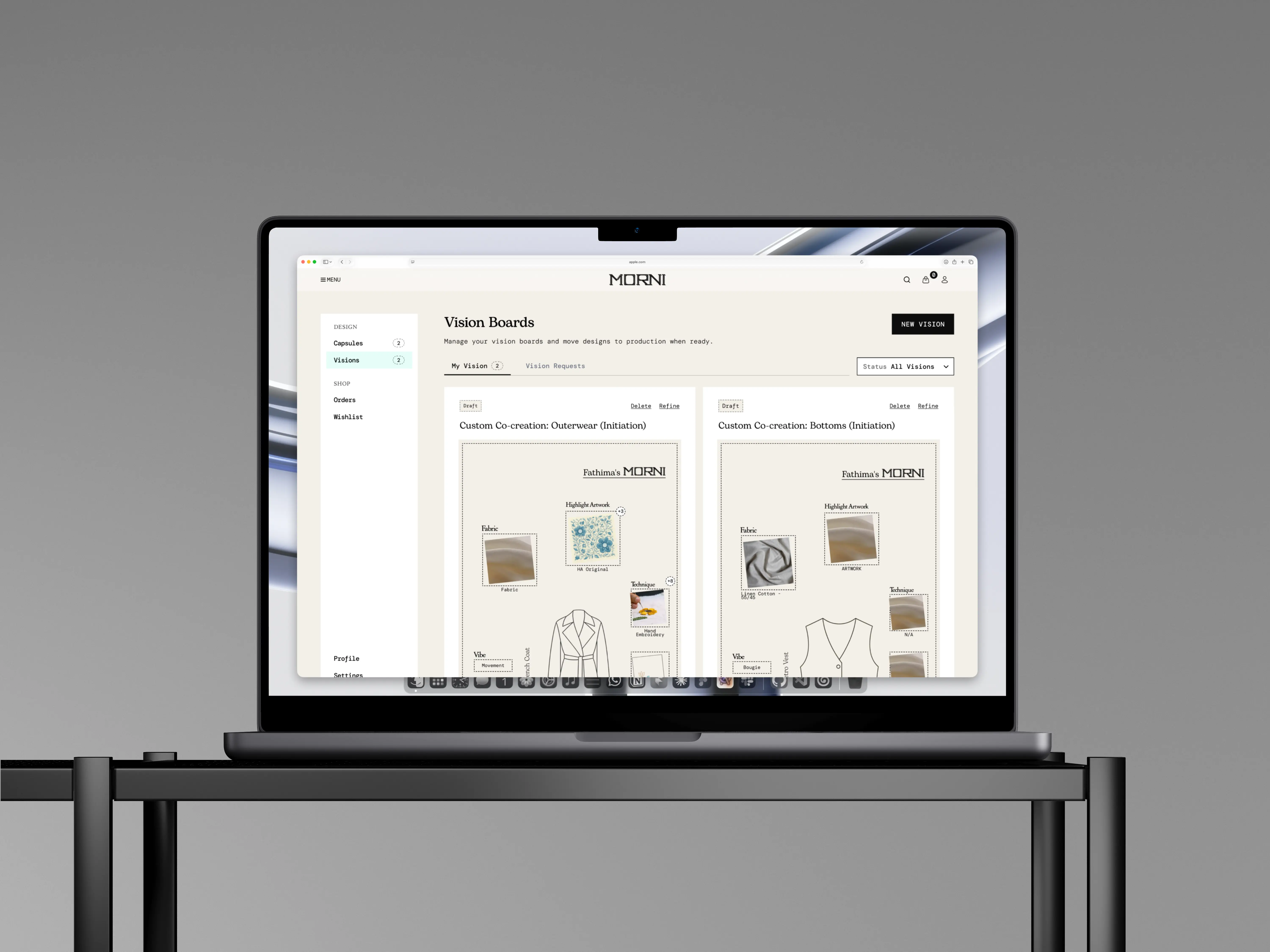
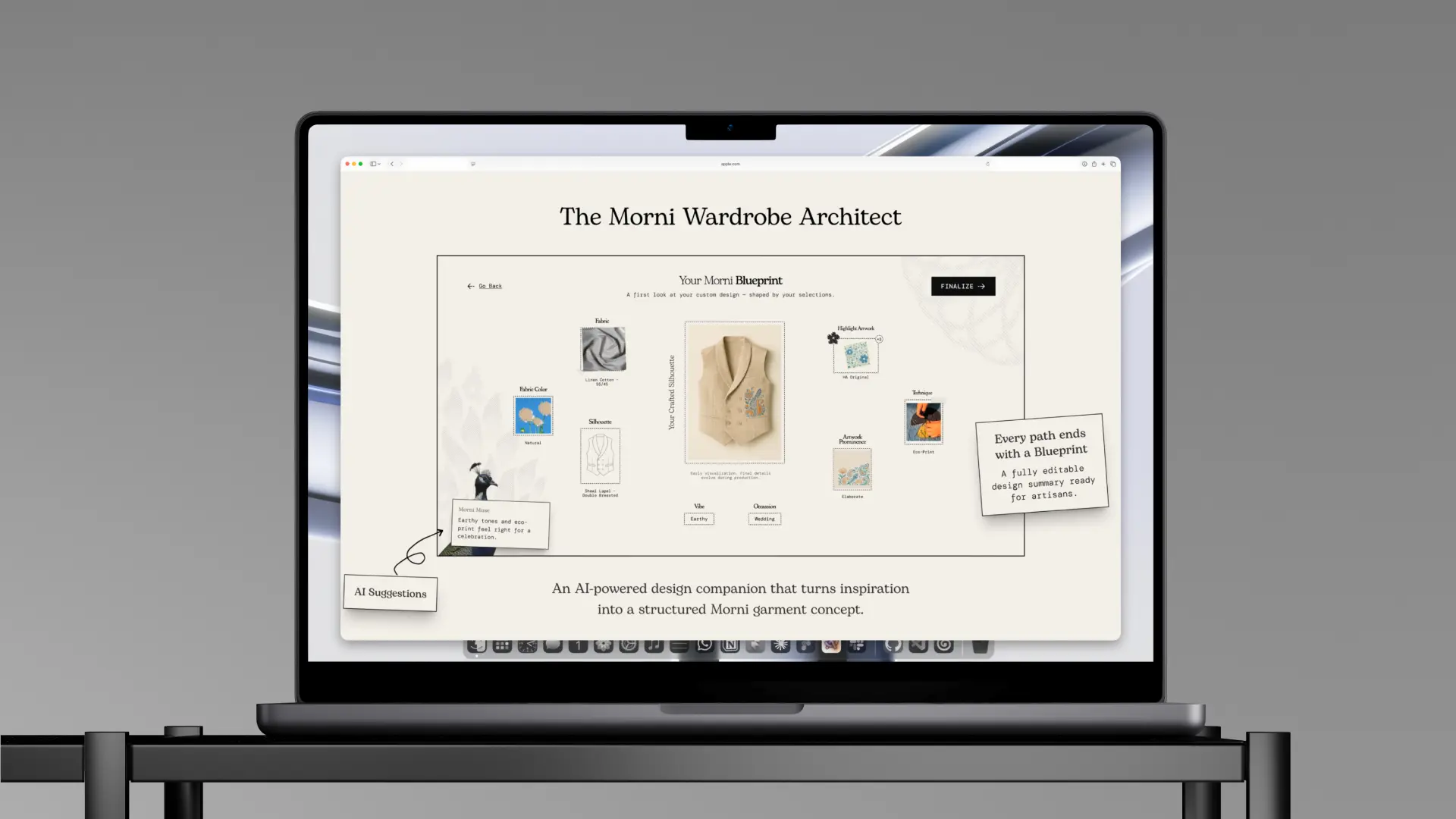
Each piece opens into a vision board, where users can explore and refine:
- Fabrics
- Artwork
- Craft techniques
- Color
- Placement
AI supports by pre-filling and suggesting, while keeping full control with the user.
[Dashboard & System]
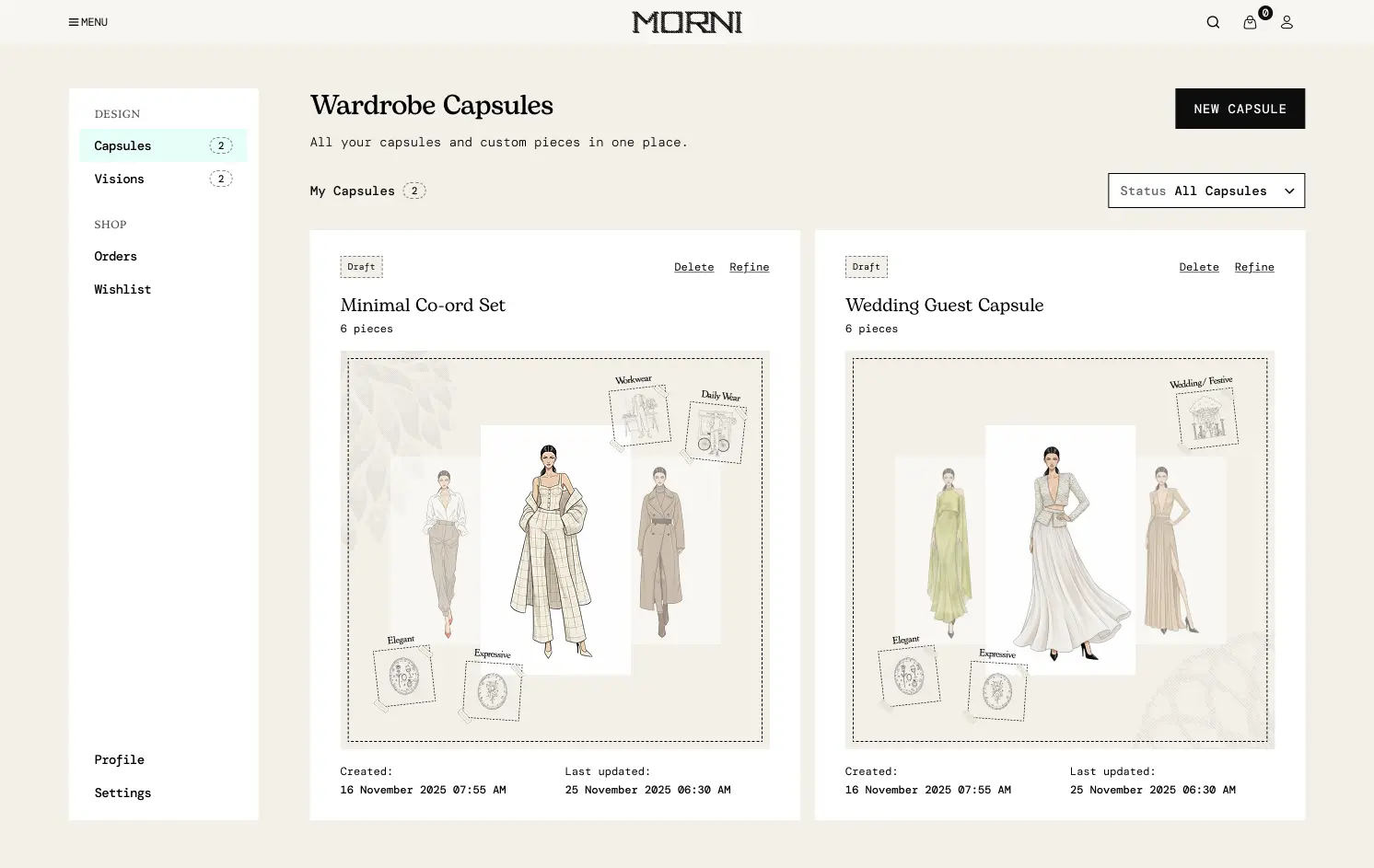
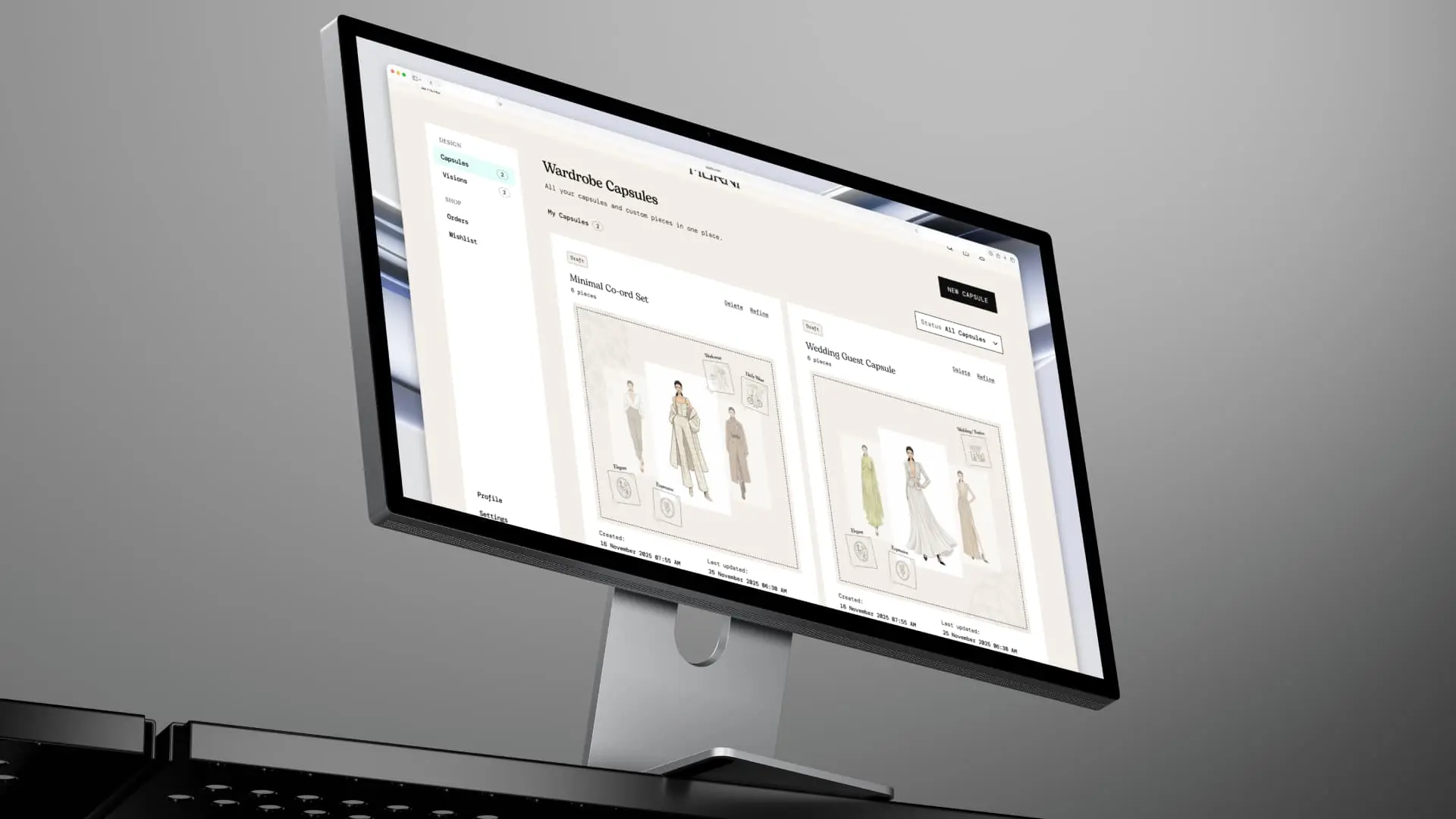
Capsules and individual designs are organized into a unified dashboard.
Users can:
- Revisit capsules
- Refine pieces
- Manage multiple wardrobe directions
The system supports iteration over time, not just one-time creation.
[Design Approach]
AI acts as a silent stylist: no chat, no voice, no interruptions. It supports the flow by:
- Predicting preferences
- Generating visual outputs
- Reducing unnecessary decisions
The experience stays visual-first, calm, and guided.
[Outcome]
The experience transforms from a heavy, form-based process into something more intuitive and inspiring.
From
Designing a garment
To
Building a wardrobe you connect with