[Overview]
Decimal sits between support and engineering: an AI platform that investigates technical issues automatically, analyzing code, logs, and production data to surface root causes without pulling in engineers.
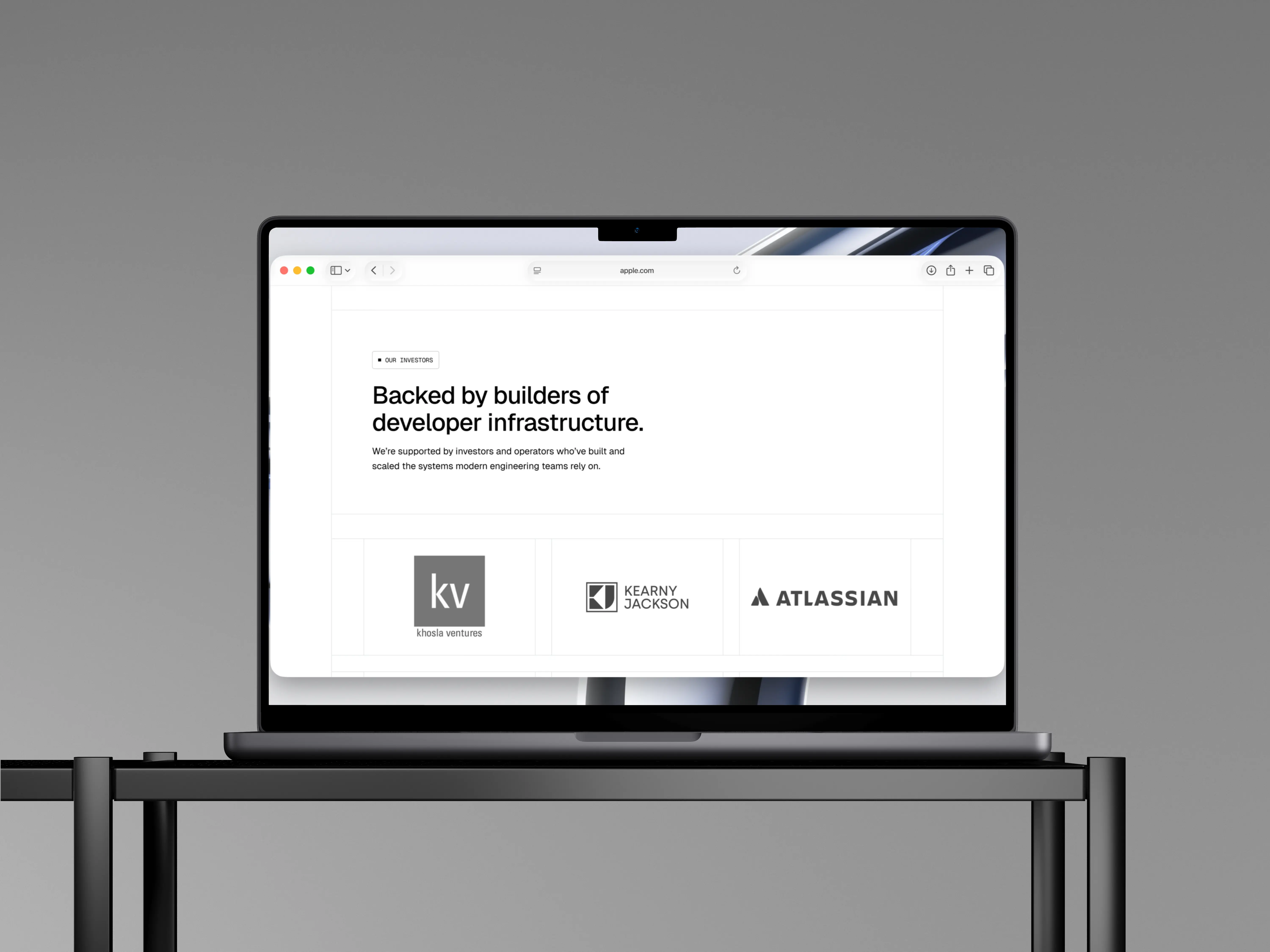
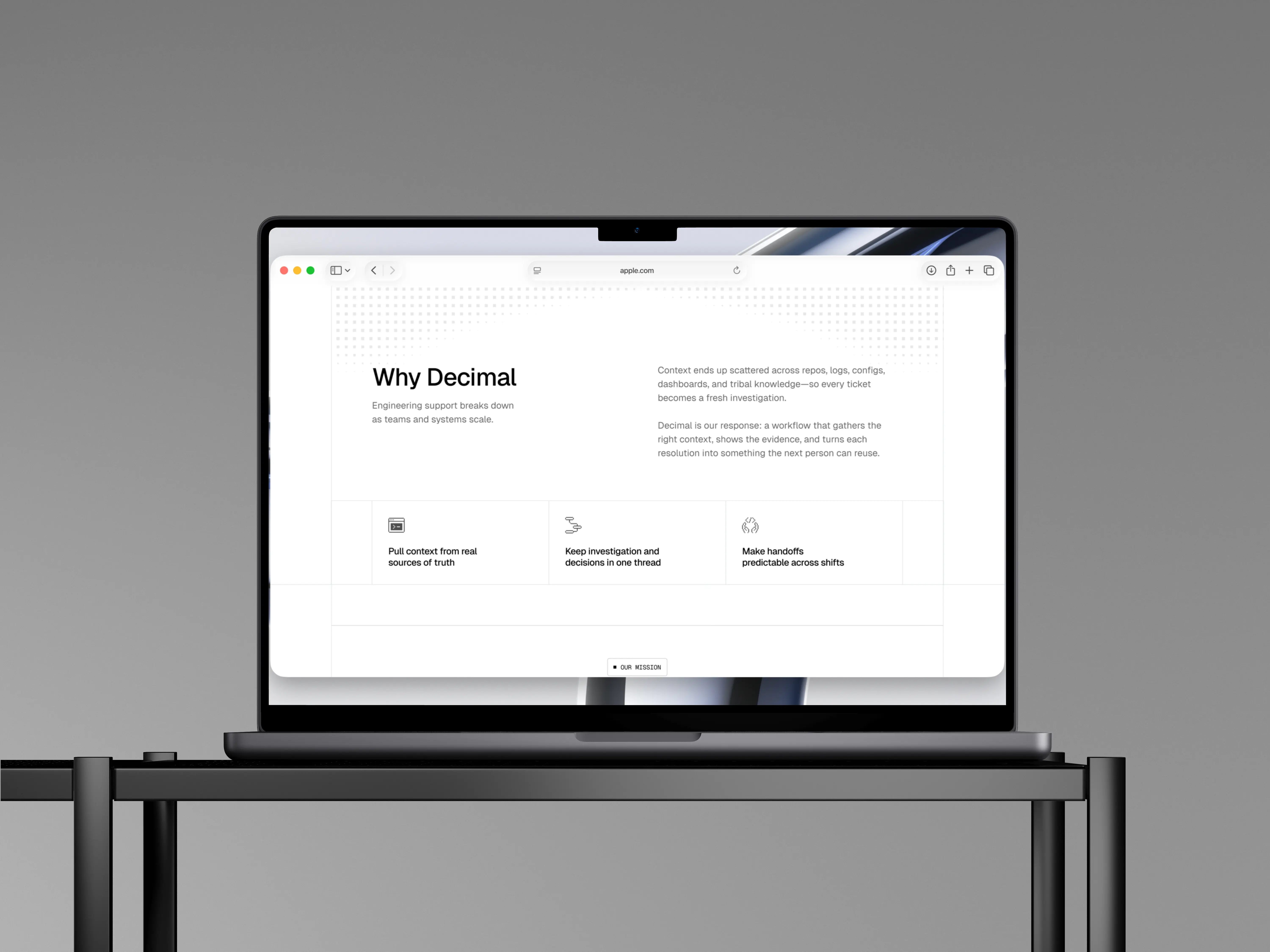
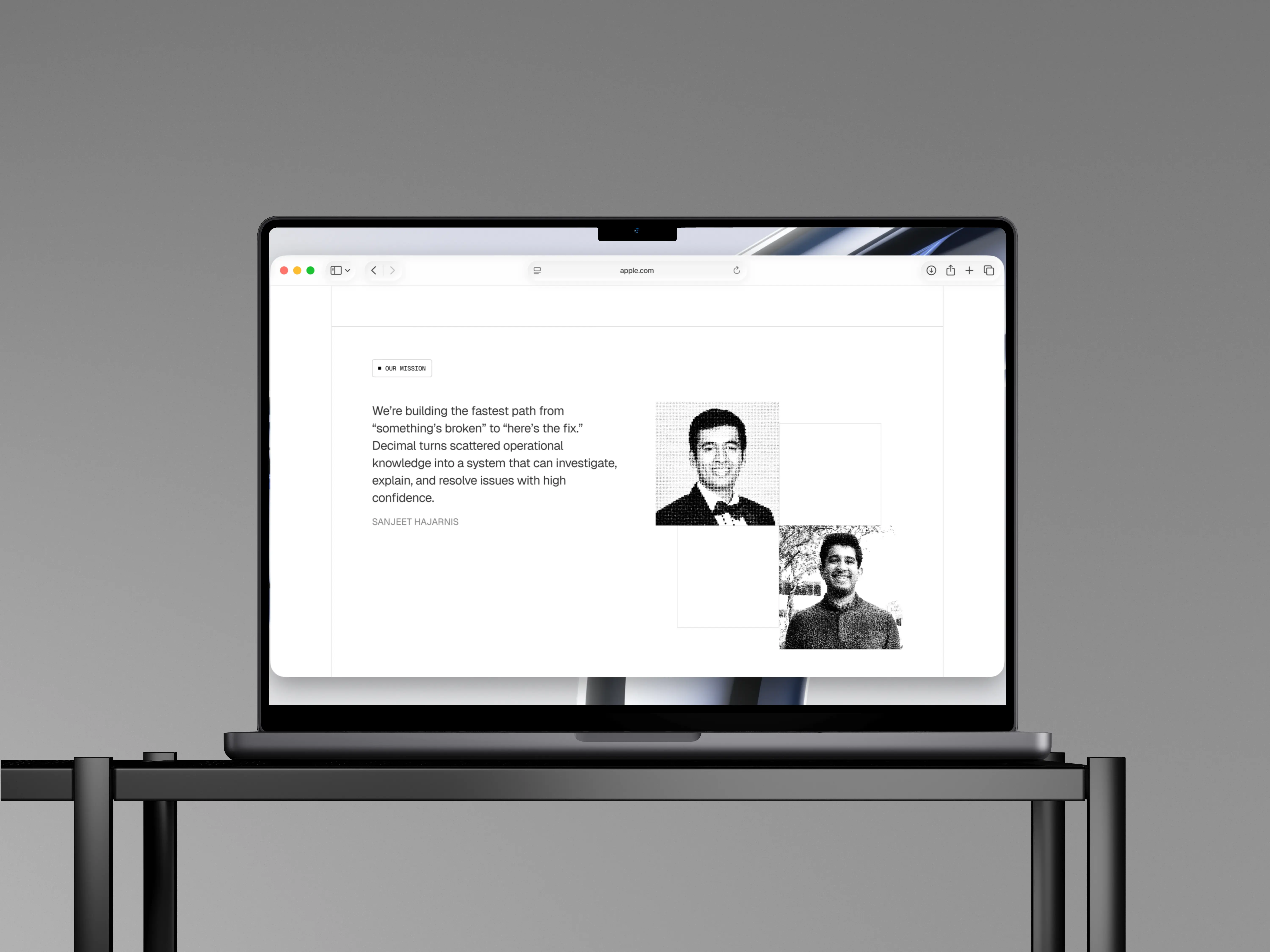
The project covered the landing page, a UI Kit used across the whole site, and five supporting pages: about, enterprise, blog, and pricing.
[The challenge]
Decimal's product is deeply technical. The challenge was making it feel clear and credible to two audiences reading the same pages: support leaders who care about outcomes, and engineering teams evaluating whether to trust it. It needed to feel precise and reliable, not generic SaaS.
[Hero storyboard]
The hero went through several rounds, and none of the early directions landed with the client. Rather than keep iterating on UI, I built a storyboard to go back to the narrative: what exactly needed to happen before the user scrolled. That clarity unlocked the direction. The UI came after the story was right.
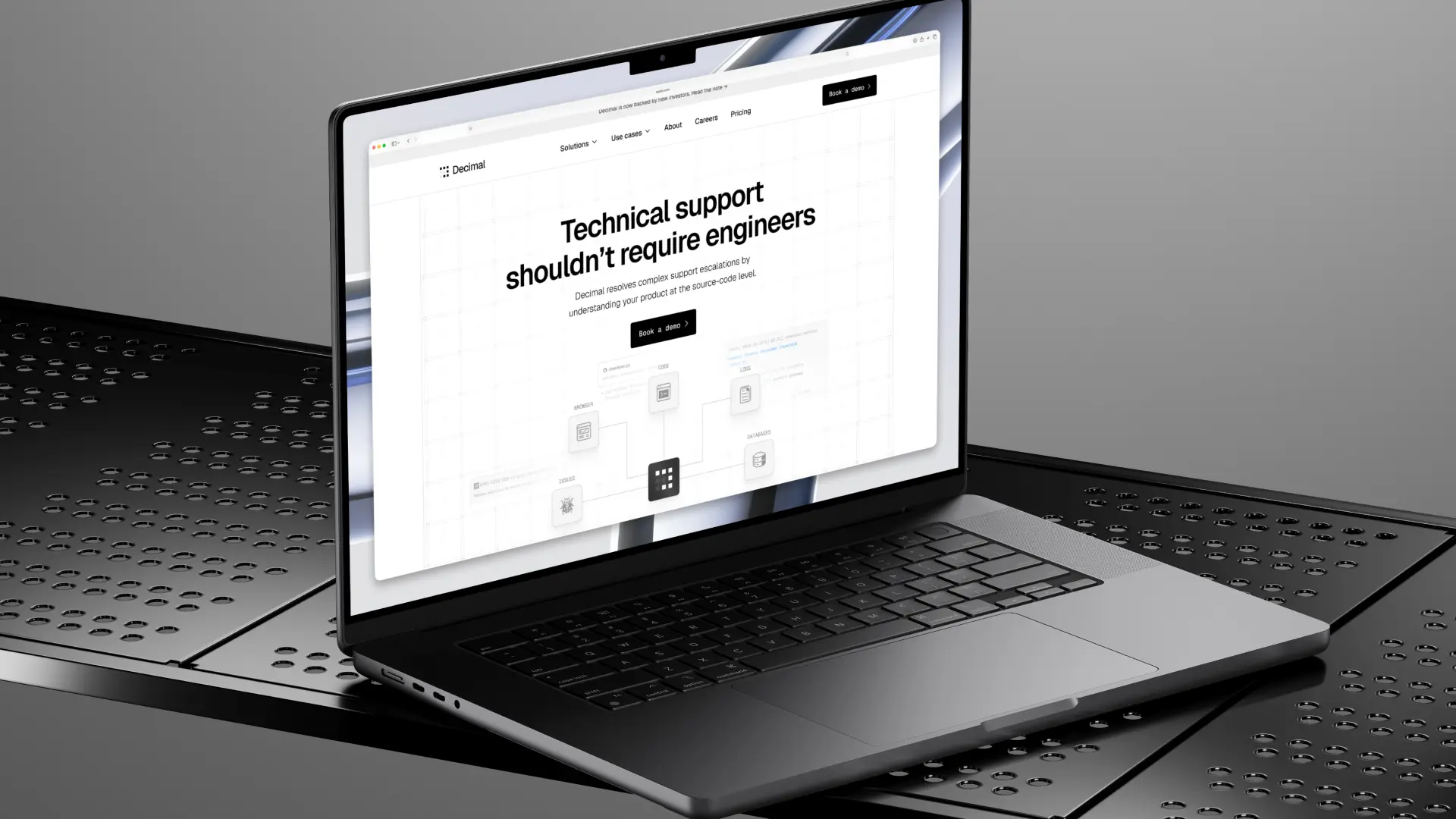
[Landing page]
The landing page is the product's first argument. I designed the layout to lead with the core promise (root cause, automated) and let the depth build from there. The goal was to feel precise without feeling heavy: credible to an engineering team, clear to a support leader.
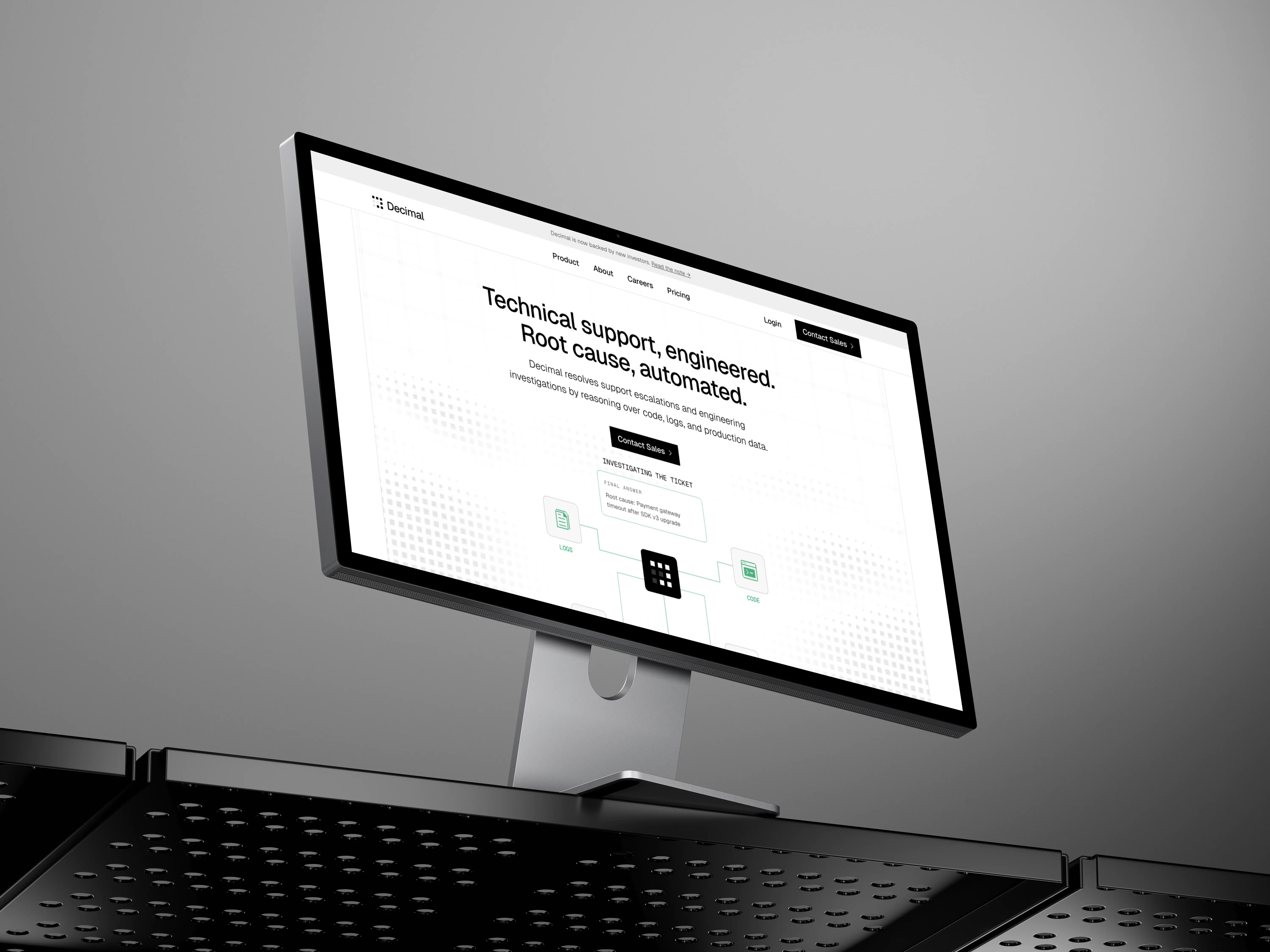
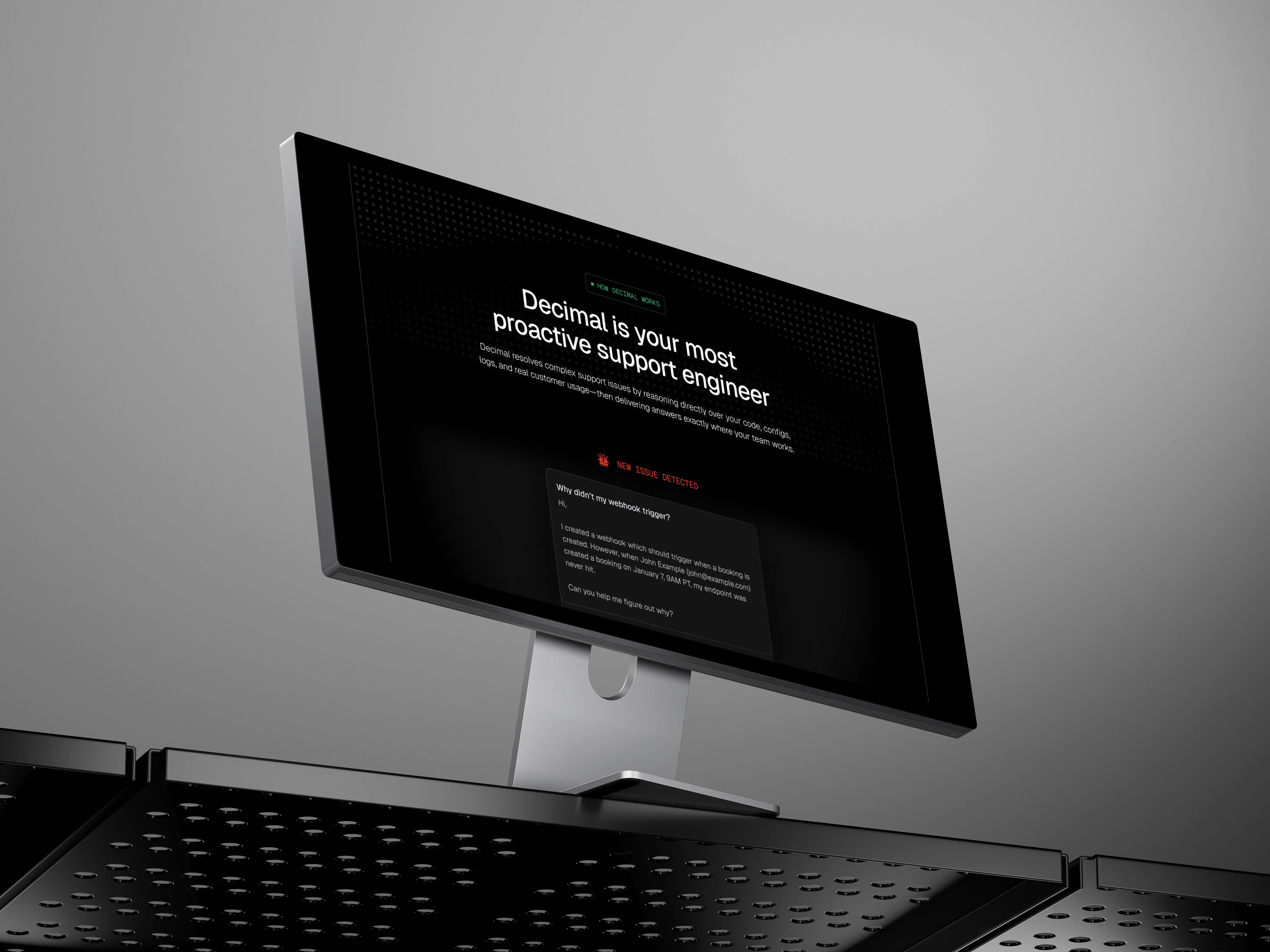
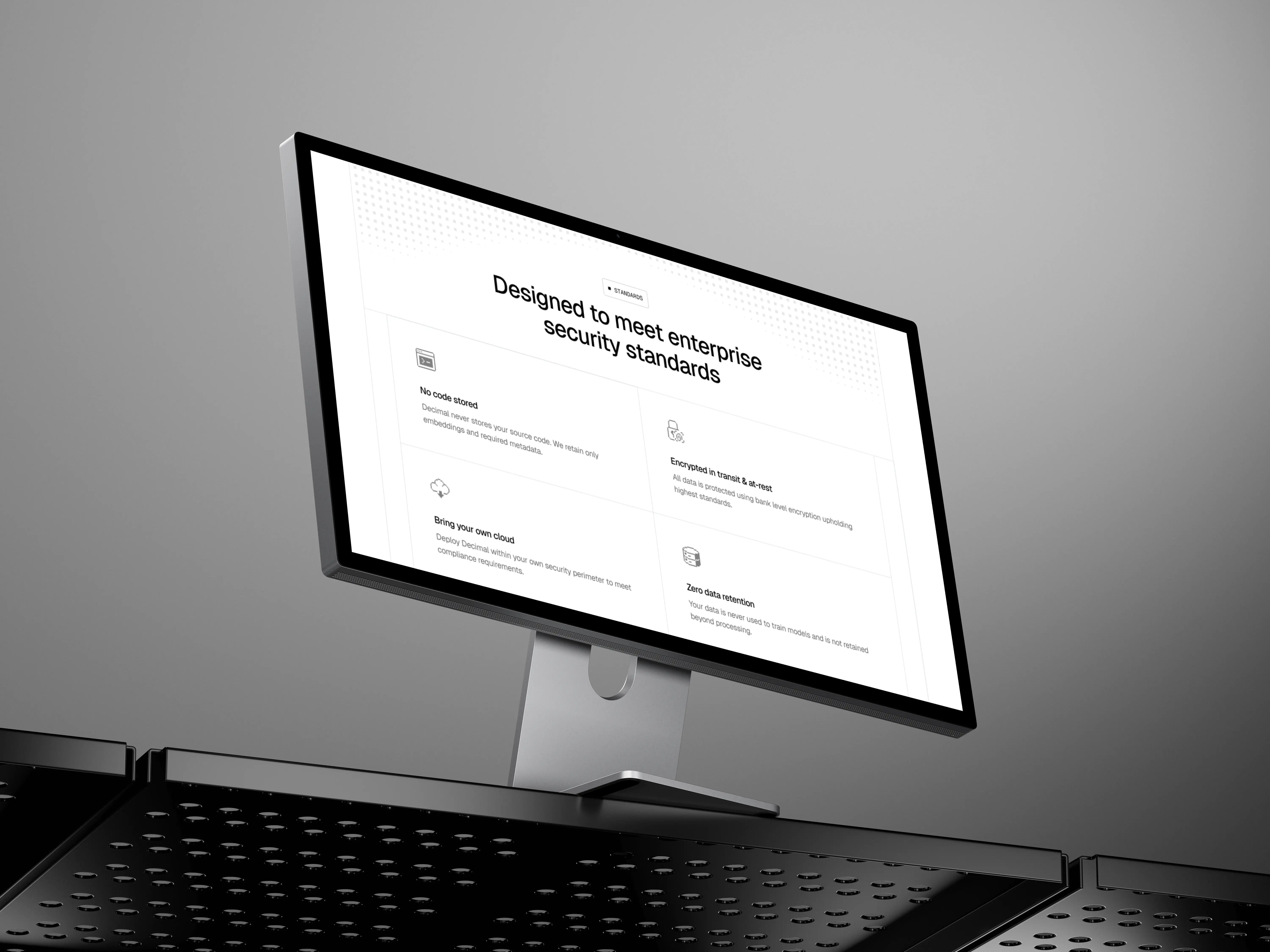
[UI Kit]
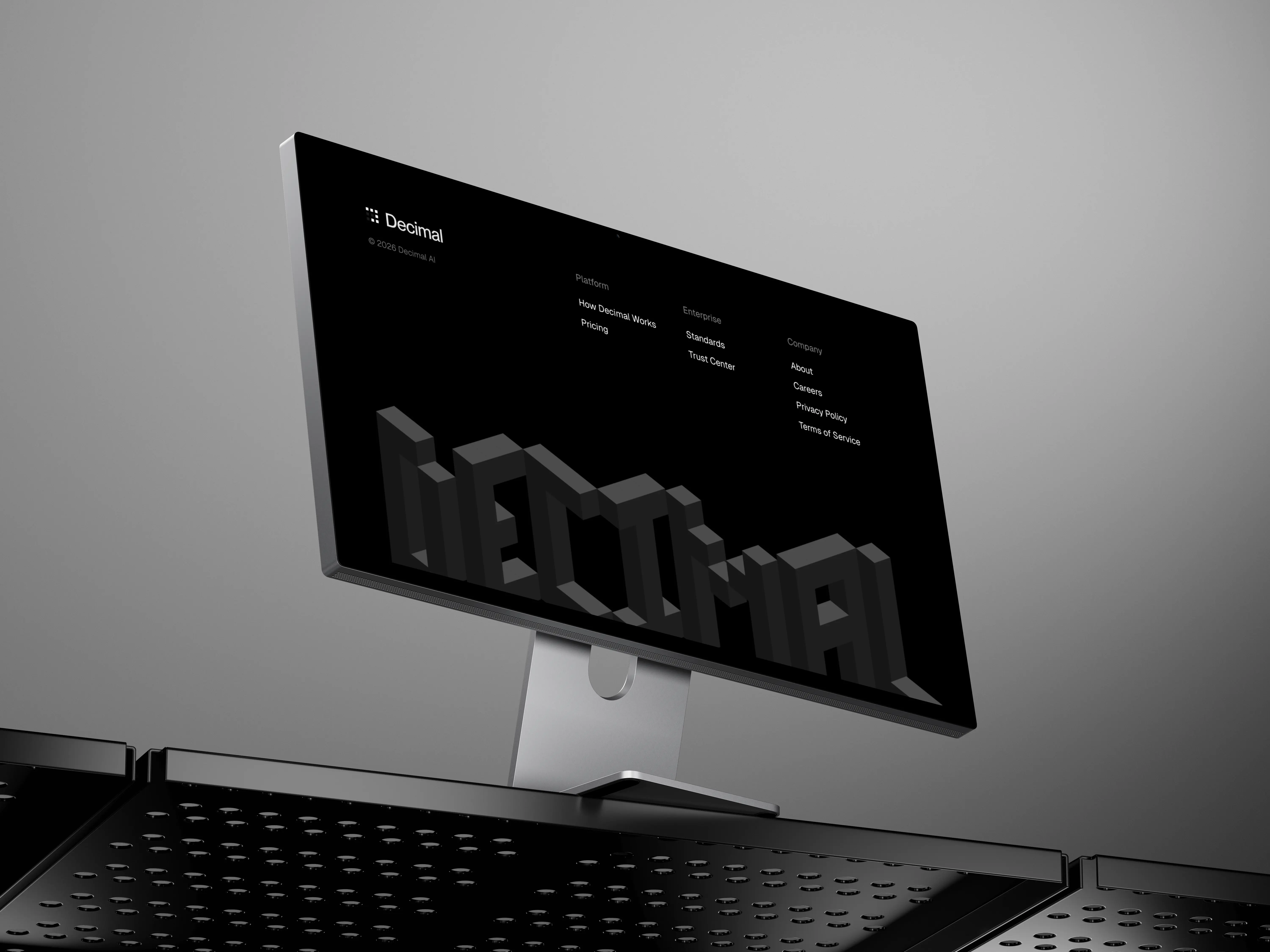
Alongside the pages, I built the UI Kit: typography, buttons, inputs, cards, and layout patterns, each defined as reusable pieces. It gave every page a consistent visual language and gave the team a clear structure to build from.
[About & Enterprise]
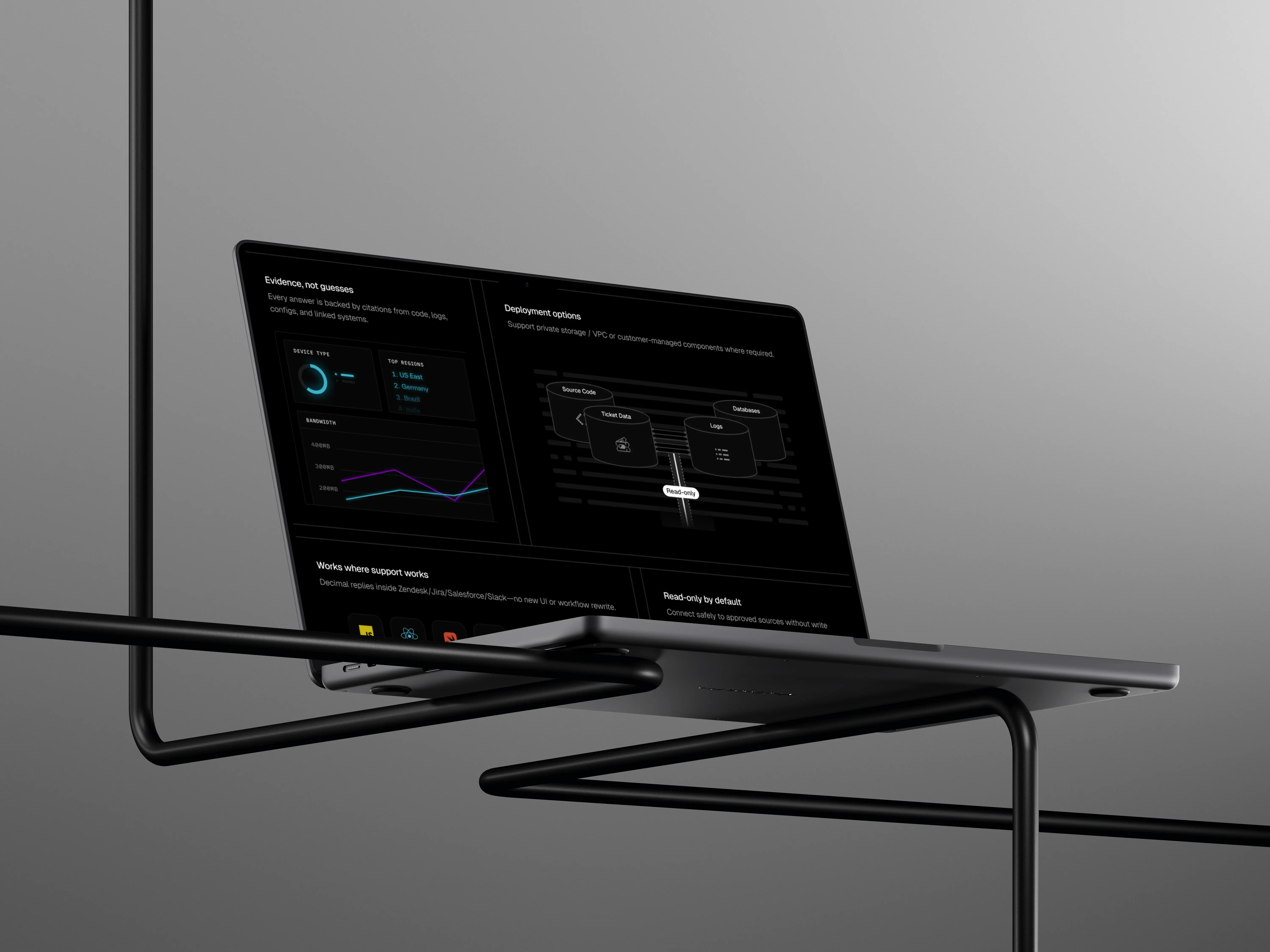
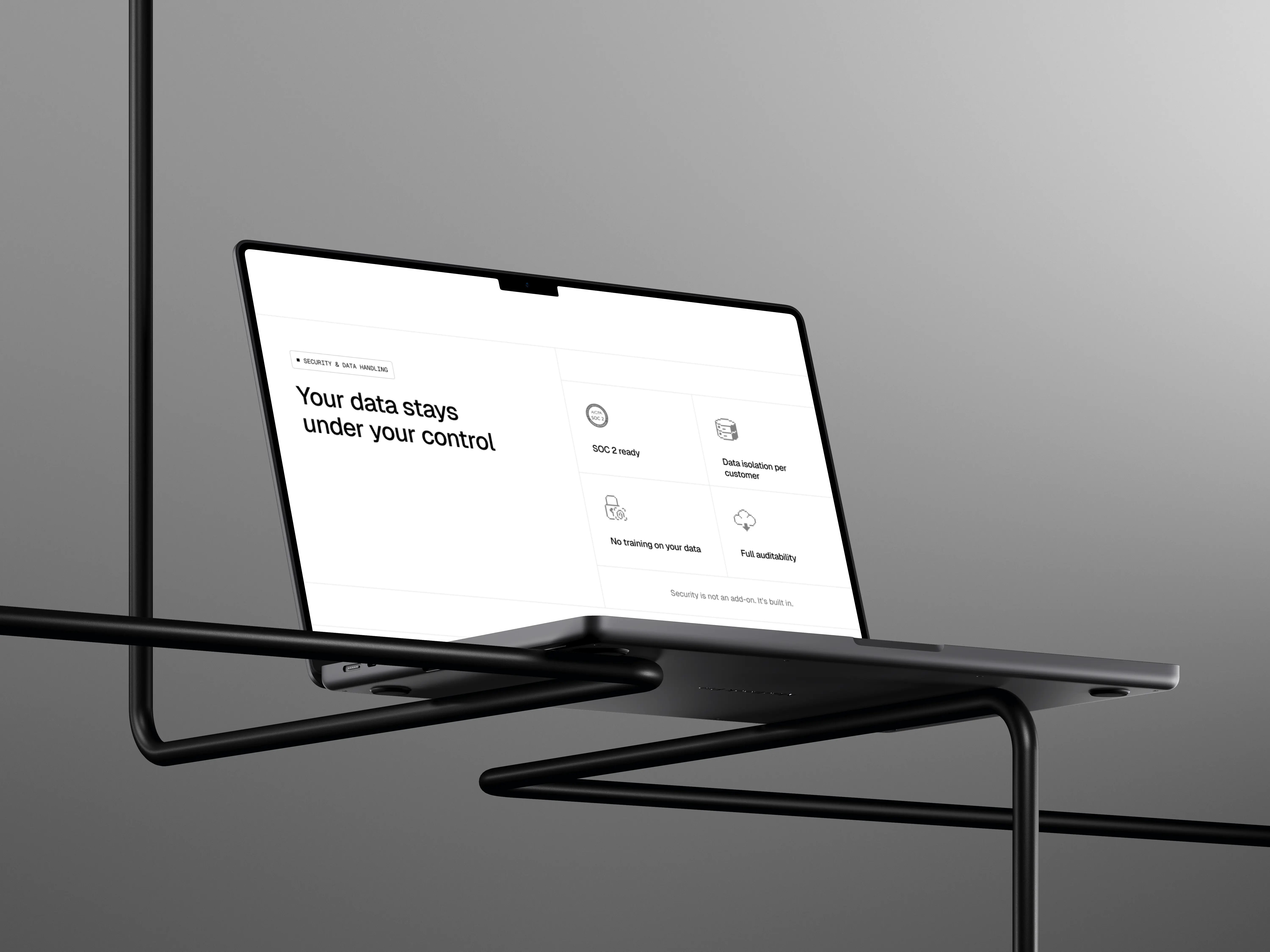
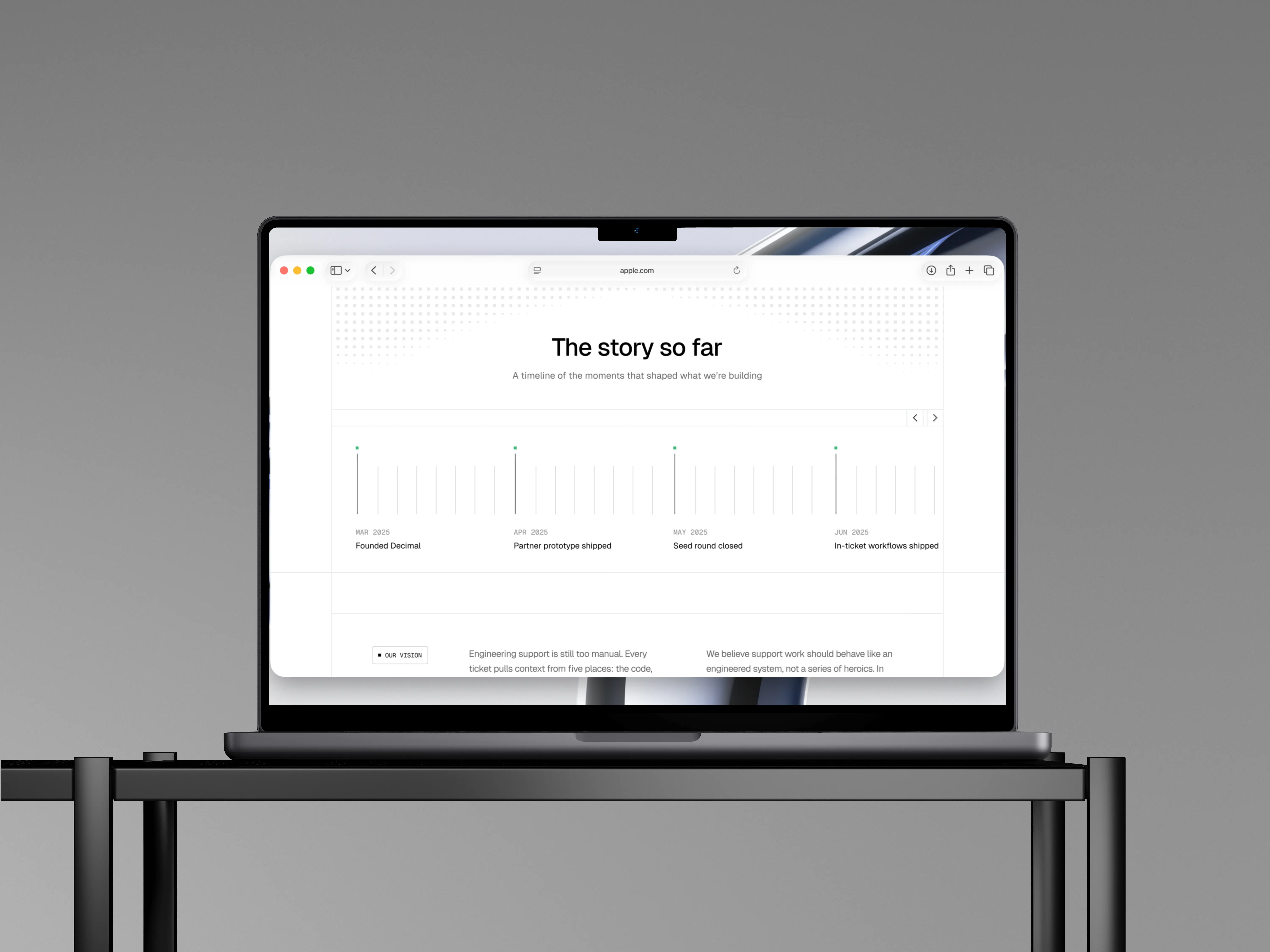
The about page built conviction: company story, team, and the positioning behind why Decimal exists. The enterprise page addressed a different reader: procurement-focused, credibility-first. About builds trust in the people; enterprise reduces risk in the decision.
[Outcome]
A landing page, five supporting pages, and a UI Kit, built from a storyboard up.
From
Technically powerful, hard to explain
To
Clear, credible, and built to convert